Original: $92.03
-65%$92.03
$32.21The Story
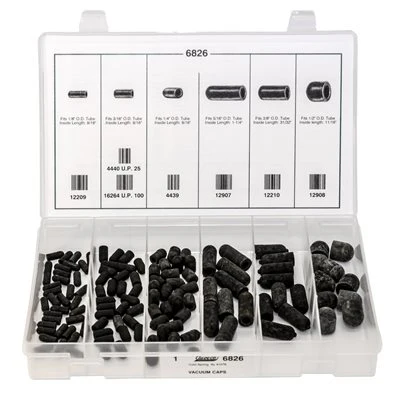
121 rubber vacuum caps in a pre-packaged assortment covering the vacuum port sizes most commonly found in automotive fuel, emissions, and intake systems. Vacuum caps plug open vacuum ports during diagnostic testing, component removal, and system repairs — an open port introduces an unmetered air leak that skews test results and prevents accurate diagnosis.
What's Included
- Rubber vacuum caps — push-on plug caps for vacuum fittings and ports
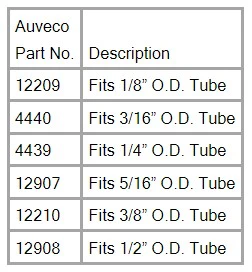
- Multiple inside diameters covering common vacuum hose and port sizes in automotive applications
- 121 pieces total
Specifications
| Material | Rubber (EPDM or neoprene, oil and fuel vapor resistant) |
| Application | Vacuum port capping during diagnostics, component removal, and system repair |
| Systems covered | Intake manifold, fuel vapor (EVAP), brake booster, EGR, PCV, emissions |
| Total pieces | 121 |
| Supplier | Auveco |
Best For
- Driveability and diagnostic technicians — vacuum leaks produce erratic idle, lean codes, and failed smoke tests; capping unused ports during diagnosis isolates the system being tested and produces accurate readings
- Emissions and smog shops — EVAP and intake vacuum systems require all ports to be sealed during pressure and smoke testing; a stocked assortment of cap sizes prevents test inaccuracies
- Engine rebuild and induction shops — intake manifold removal, throttle body service, and carburetor work expose multiple vacuum ports that need to be capped during the repair to prevent debris ingestion and air leaks
- General automotive service shops — any shop that works on vacuum-dependent systems benefits from having the right cap size in reach for testing and repair
Common Vacuum Cap Applications
Rubber vacuum caps are used throughout an automotive vacuum system whenever a port needs to be temporarily or permanently sealed:
- Intake manifold ports — unused vacuum taps on the intake manifold need to be capped to prevent lean misfires and rough idle
- EVAP system — during purge valve removal or canister replacement, open vapor lines need to be capped to prevent fuel vapors from escaping and contaminating a smoke test
- Brake booster — vacuum-assisted brake booster testing requires capping the booster port to hold a vacuum and measure decay rate
- EGR and PCV systems — component removal for cleaning or replacement exposes vacuum fittings that need to be sealed during the service interval
Select the cap size by the outside diameter of the vacuum port fitting or hose barb — the cap's inside diameter should be slightly smaller for a snug, airtight fit. Questions? Contact us.
Shipping & Ordering
- Ships within 1–2 business days from our warehouse
- Volume pricing available — save up to 20% when ordering 3 or more
- Reorder regularly? Ask us about a B2B account with a quarterly restock cadence and custom pricing — contact us
Details & Craftsmanship
Every detail has been carefully considered to bring you the perfect product.
Description
121 rubber vacuum caps in a pre-packaged assortment covering the vacuum port sizes most commonly found in automotive fuel, emissions, and intake systems. Vacuum caps plug open vacuum ports during diagnostic testing, component removal, and system repairs — an open port introduces an unmetered air leak that skews test results and prevents accurate diagnosis.
What's Included
- Rubber vacuum caps — push-on plug caps for vacuum fittings and ports
- Multiple inside diameters covering common vacuum hose and port sizes in automotive applications
- 121 pieces total
Specifications
| Material | Rubber (EPDM or neoprene, oil and fuel vapor resistant) |
| Application | Vacuum port capping during diagnostics, component removal, and system repair |
| Systems covered | Intake manifold, fuel vapor (EVAP), brake booster, EGR, PCV, emissions |
| Total pieces | 121 |
| Supplier | Auveco |
Best For
- Driveability and diagnostic technicians — vacuum leaks produce erratic idle, lean codes, and failed smoke tests; capping unused ports during diagnosis isolates the system being tested and produces accurate readings
- Emissions and smog shops — EVAP and intake vacuum systems require all ports to be sealed during pressure and smoke testing; a stocked assortment of cap sizes prevents test inaccuracies
- Engine rebuild and induction shops — intake manifold removal, throttle body service, and carburetor work expose multiple vacuum ports that need to be capped during the repair to prevent debris ingestion and air leaks
- General automotive service shops — any shop that works on vacuum-dependent systems benefits from having the right cap size in reach for testing and repair
Common Vacuum Cap Applications
Rubber vacuum caps are used throughout an automotive vacuum system whenever a port needs to be temporarily or permanently sealed:
- Intake manifold ports — unused vacuum taps on the intake manifold need to be capped to prevent lean misfires and rough idle
- EVAP system — during purge valve removal or canister replacement, open vapor lines need to be capped to prevent fuel vapors from escaping and contaminating a smoke test
- Brake booster — vacuum-assisted brake booster testing requires capping the booster port to hold a vacuum and measure decay rate
- EGR and PCV systems — component removal for cleaning or replacement exposes vacuum fittings that need to be sealed during the service interval
Select the cap size by the outside diameter of the vacuum port fitting or hose barb — the cap's inside diameter should be slightly smaller for a snug, airtight fit. Questions? Contact us.
Shipping & Ordering
- Ships within 1–2 business days from our warehouse
- Volume pricing available — save up to 20% when ordering 3 or more
- Reorder regularly? Ask us about a B2B account with a quarterly restock cadence and custom pricing — contact us