The Story
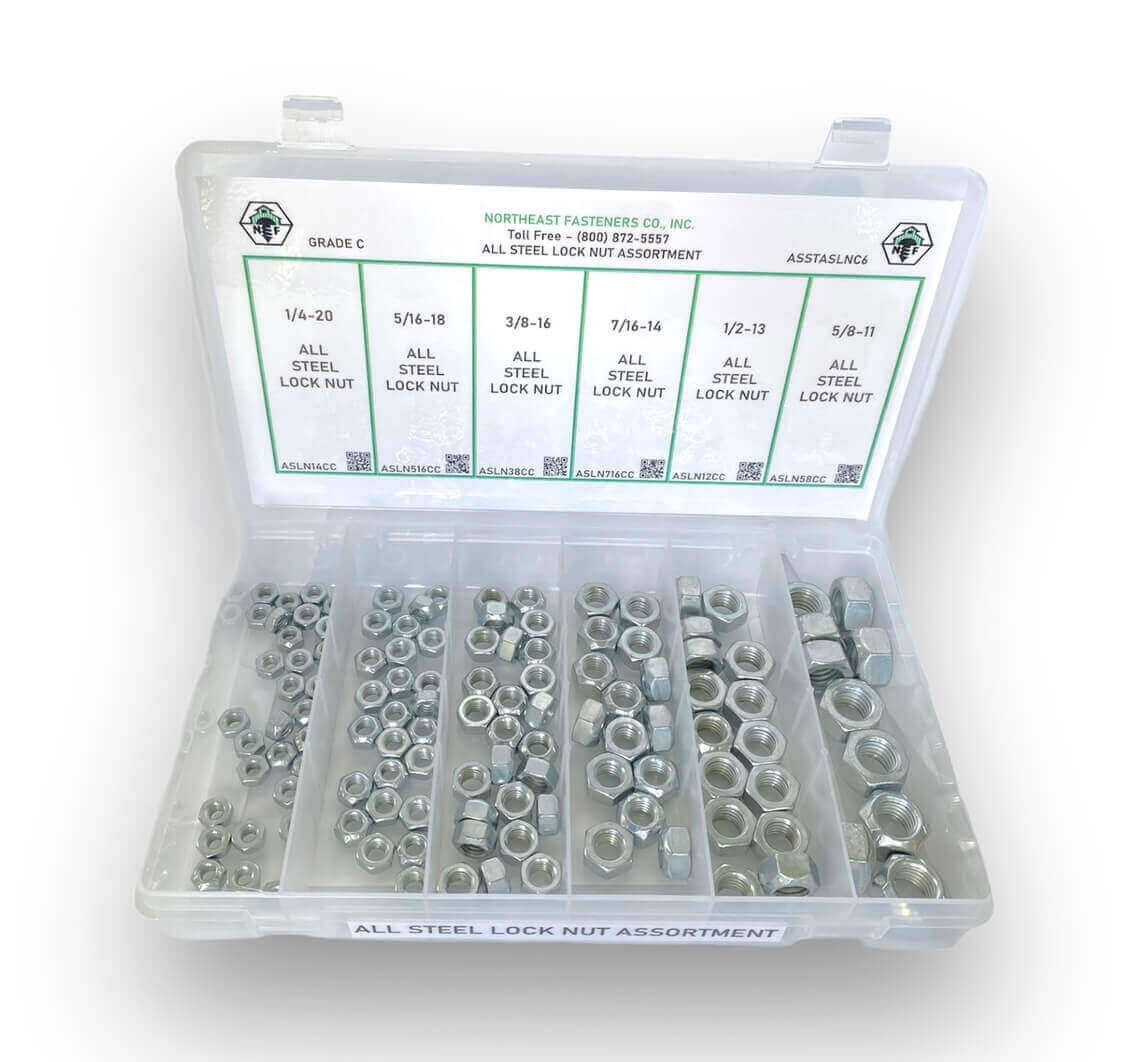
120 all-steel prevailing torque lock nuts, UNC coarse thread, organized in a compact plastic drawer — no nylon insert, so they stay put where heat, chemicals, or high torque would compromise a standard nylon lock nut. Covers 1/4" through 1/2" UNC, the range most shops need for equipment, vehicle, and structural applications.
What's Included
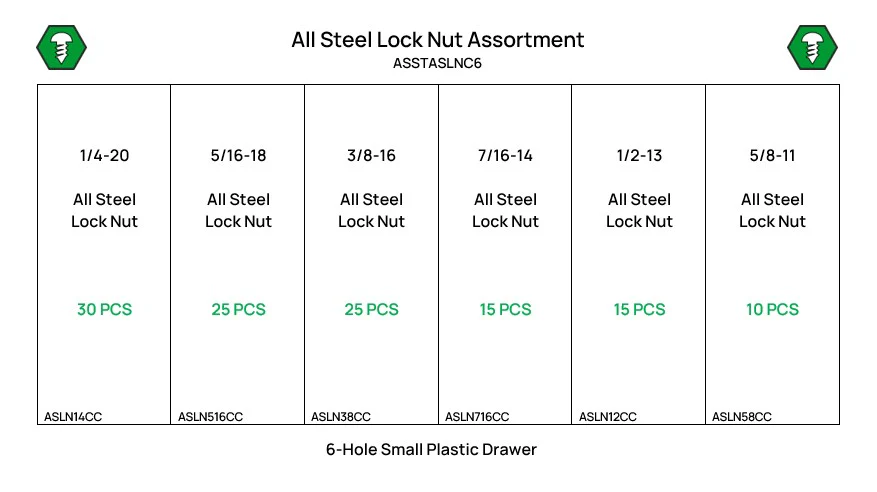
- All-steel prevailing torque lock nuts in 1/4"-20, 5/16"-18, 3/8"-16, 7/16"-14, and 1/2"-13 UNC coarse thread
- Multiple pieces per size — stocked for real-world shop use, not just sampling
- Compact QR-coded labeled plastic drawer — ready to stock on your bench or parts shelf
- 120 pieces total
Specifications
| Thread standard | UNC — Unified National Coarse |
| Type | All-steel prevailing torque lock nut |
| Standard | ASME B18.16.6 |
| Material | Steel — no nylon insert |
| Finish | Zinc plated |
| Diameters | 1/4"-20, 5/16"-18, 3/8"-16, 7/16"-14, 1/2"-13 |
| Total pieces | 120 |
| SKU | ASSTASLNC6 |
Best For
- High-temperature applications — exhaust systems, engine compartments, and industrial equipment where sustained heat would soften or destroy a nylon insert
- Vibration-intensive environments — heavy equipment, agricultural machinery, and truck chassis where all-metal construction holds up under constant movement
- Chemical and outdoor exposure — applications where nylon degrades from oil, fuel, or long-term UV exposure
- High-torque connections — all-steel lock nuts handle higher clamp loads than nylon insert nuts, making them the right choice where full fastener strength is required
- Fleet and industrial maintenance shops — stocking both nylon-insert and all-steel lock nuts means you're covered for the full range of service situations
About All-Steel Lock Nuts
Prevailing torque lock nuts resist loosening through friction — no secondary locking component required. All-steel versions achieve this through a deformed or crimped thread zone near the top of the nut, which creates interference against the bolt thread as the nut is run down. The result is a nut that resists vibration and back-out without relying on any polymer material.
The key distinction from a nylon insert (Nyloc) lock nut is temperature and chemical resistance. Nylon inserts are rated to approximately 250°F in continuous service. All-steel lock nuts have no polymer to degrade, so they remain effective in high-heat environments — exhaust flanges, turbo housings, engine mounts, and industrial equipment that runs hot.
All-steel prevailing torque lock nuts are also reusable for a limited number of cycles, though like any prevailing torque nut, they should be inspected for thread condition before reinstallation in critical applications.
Shipping & Ordering
- Ships within 1–2 business days from our warehouse
- Volume pricing available — save up to 20% when ordering 3 or more kits
- B2B accounts: Fleet facilities, equipment dealers, and maintenance teams can apply for a business account with custom pricing and a dedicated rep — contact us to get started
Details & Craftsmanship
Every detail has been carefully considered to bring you the perfect product.
Description
120 all-steel prevailing torque lock nuts, UNC coarse thread, organized in a compact plastic drawer — no nylon insert, so they stay put where heat, chemicals, or high torque would compromise a standard nylon lock nut. Covers 1/4" through 1/2" UNC, the range most shops need for equipment, vehicle, and structural applications.
What's Included
- All-steel prevailing torque lock nuts in 1/4"-20, 5/16"-18, 3/8"-16, 7/16"-14, and 1/2"-13 UNC coarse thread
- Multiple pieces per size — stocked for real-world shop use, not just sampling
- Compact QR-coded labeled plastic drawer — ready to stock on your bench or parts shelf
- 120 pieces total
Specifications
| Thread standard | UNC — Unified National Coarse |
| Type | All-steel prevailing torque lock nut |
| Standard | ASME B18.16.6 |
| Material | Steel — no nylon insert |
| Finish | Zinc plated |
| Diameters | 1/4"-20, 5/16"-18, 3/8"-16, 7/16"-14, 1/2"-13 |
| Total pieces | 120 |
| SKU | ASSTASLNC6 |
Best For
- High-temperature applications — exhaust systems, engine compartments, and industrial equipment where sustained heat would soften or destroy a nylon insert
- Vibration-intensive environments — heavy equipment, agricultural machinery, and truck chassis where all-metal construction holds up under constant movement
- Chemical and outdoor exposure — applications where nylon degrades from oil, fuel, or long-term UV exposure
- High-torque connections — all-steel lock nuts handle higher clamp loads than nylon insert nuts, making them the right choice where full fastener strength is required
- Fleet and industrial maintenance shops — stocking both nylon-insert and all-steel lock nuts means you're covered for the full range of service situations
About All-Steel Lock Nuts
Prevailing torque lock nuts resist loosening through friction — no secondary locking component required. All-steel versions achieve this through a deformed or crimped thread zone near the top of the nut, which creates interference against the bolt thread as the nut is run down. The result is a nut that resists vibration and back-out without relying on any polymer material.
The key distinction from a nylon insert (Nyloc) lock nut is temperature and chemical resistance. Nylon inserts are rated to approximately 250°F in continuous service. All-steel lock nuts have no polymer to degrade, so they remain effective in high-heat environments — exhaust flanges, turbo housings, engine mounts, and industrial equipment that runs hot.
All-steel prevailing torque lock nuts are also reusable for a limited number of cycles, though like any prevailing torque nut, they should be inspected for thread condition before reinstallation in critical applications.
Shipping & Ordering
- Ships within 1–2 business days from our warehouse
- Volume pricing available — save up to 20% when ordering 3 or more kits
- B2B accounts: Fleet facilities, equipment dealers, and maintenance teams can apply for a business account with custom pricing and a dedicated rep — contact us to get started